STEM Needs Her: Increasing Girls’ Representation Through Community Outreach
Society has come a long way in making important strides towards gender equity in STEM. Today, women make up 35% of the STEM workforce (Swafford, M., & Anderson, R., 2020), and when compared to previous decades, we see clear signs of improvement! Girls also tend to match or exceed boys in math performance in high school and college (Cheryan, 2012). These changes highlight the importance of cultural shifts and perceptions.
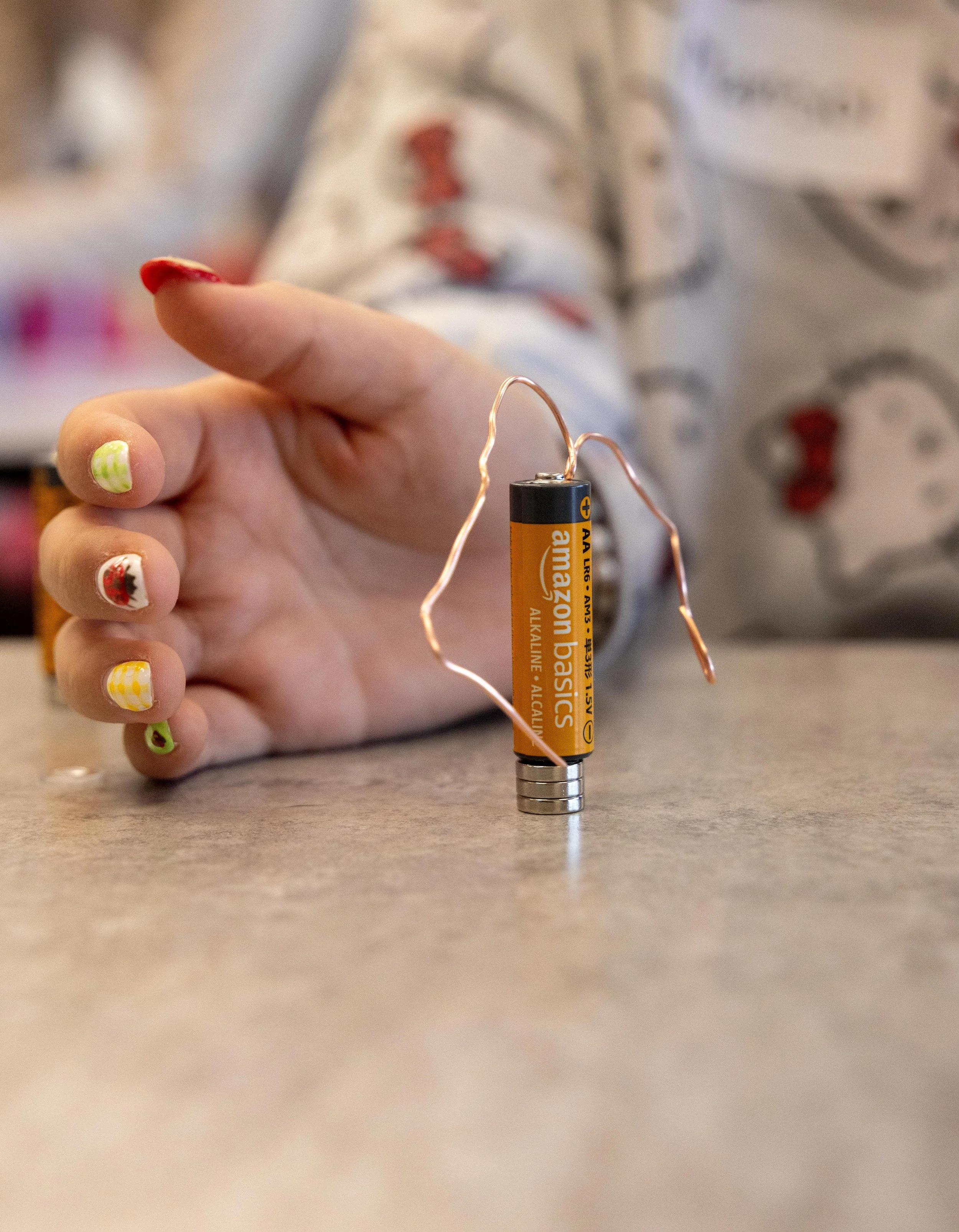
Photographed by: Four Youth Productions
However, the journey isn’t over just yet. Women still remain underrepresented in key fields like engineering and computer science, often leaving STEM at higher rates before reaching leadership positions.
Understanding Gender Disparities
With this in mind, there is a growing need for equal and equitable representation of women in STEM. The interest in STEM is growing among girls, but many end up choosing not to pursue it.
These disparities can be understood with early stereotypes and representations of STEM. From a young age, girls can internalize the message that STEM is "for boys", often before any actual performance gaps even appear. In addition to this, the perception of STEM fields being predominantly male, isolated, and technology-focused contradicts values traditionally encouraged in girls such as, being social and helping others.
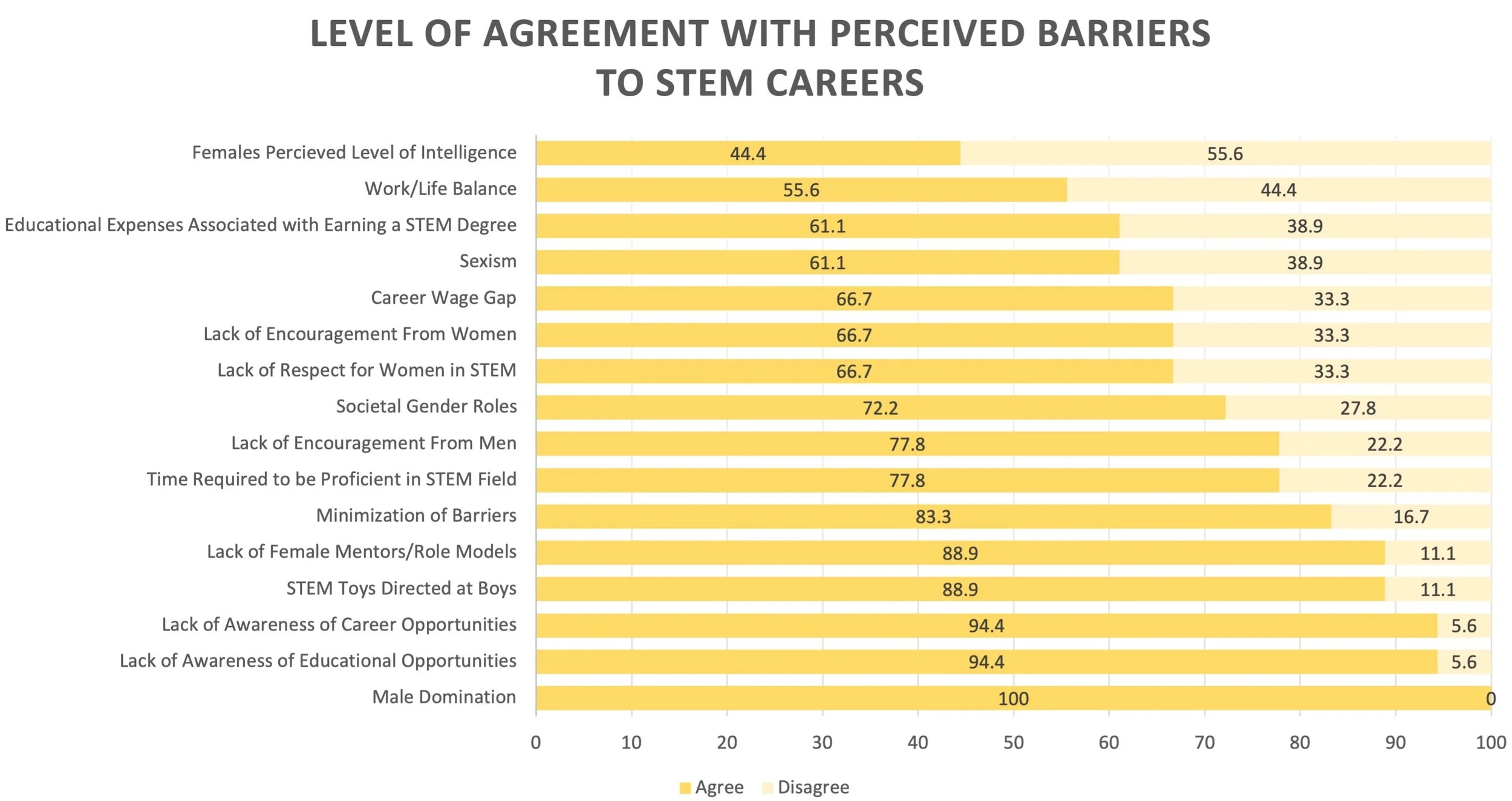
Women’s perceived barriers to pursuing STEM careers. Swafford & Anderson (2020).
STEM IS Communal
Research shows that girls tend to prefer communal careers where collaboration is encouraged and the social impact of their contribution and work is more clear (Lippa 1998; Morgan et al. 2001). As a result, they may overlook or rule out math-intensive fields like engineering or computer science because they may not seem communal at first glance. STEM is often inaccurately perceived as less compatible with communal values, but the truth is: STEM is deeply connected to making a difference in the world.
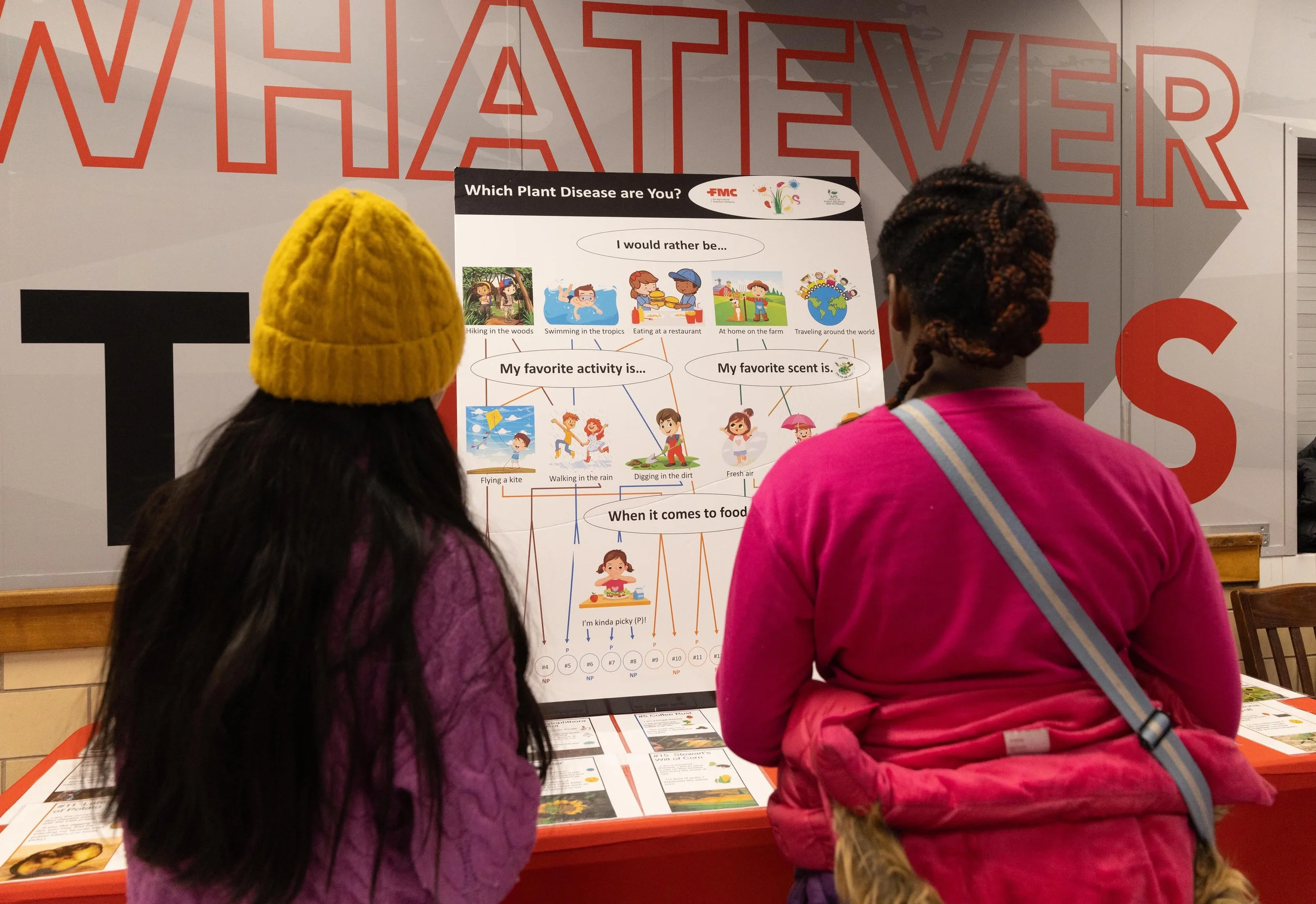
Engineering Your Tomorrow, 2025. Girls learning about plant diseases. Photographed by: Four Youth Productions
Research is the backbone of medicine, public health, and public policy.
The vaccines that protect us from illness? STEM.
The seatbelt that keeps you safe in the car? STEM.
The clean air laws that let kids breathe easier? Also STEM.
Scientists and engineers gather the evidence policymakers need to make smarter decisions for schools, hospitals, and communities. Whether it's a study on mental health, clean air, or nutrition, STEM research is what helps improve lives!
Importance of Community Outreach
So how can we encourage girls to stay interested in STEM?
We believe in the power of community outreach, programs that welcome girls into STEM through real experiences, mentorship, and hands-on learning. These opportunities help girls see the human side of science and recognize that they belong in these spaces.
It’s important to acknowledge very realistic obstacles: these initiatives often feel out of reach for young girls.
You might hear about an amazing robotics camp yet never see a flyer at school, or you want to join but don’t know where to begin. Despite this, it’s important to still get involved! Know that you don’t need permission to start. A student, teacher, parent, or mentor, anyone, can create an opportunity: starting a club, hosting a workshop, or even mentoring younger students. The first step doesn’t have to be huge; it just has to happen.
“Most girls are taught to avoid failure and risk. To smile pretty, play it safe, get all A’s. Boys, on the other hand, are taught to play rough, swing high, crawl to the top of the monkey bars and then jump off head first...We’re raising our girls to be perfect and we’re raising our boys to be brave.”
Our Work in Delaware
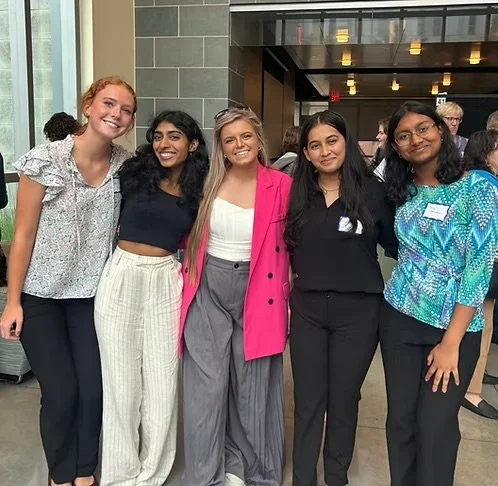
Behavioral Epigenetic Summer (BES) Internship
Last summer, a research lab at the University of Delaware implemented a summer internship program. Amanda served as a mentor to high school girls coaching them through research methodologies, laboratory practices, and science communication.
Engineering Your Tomorrow
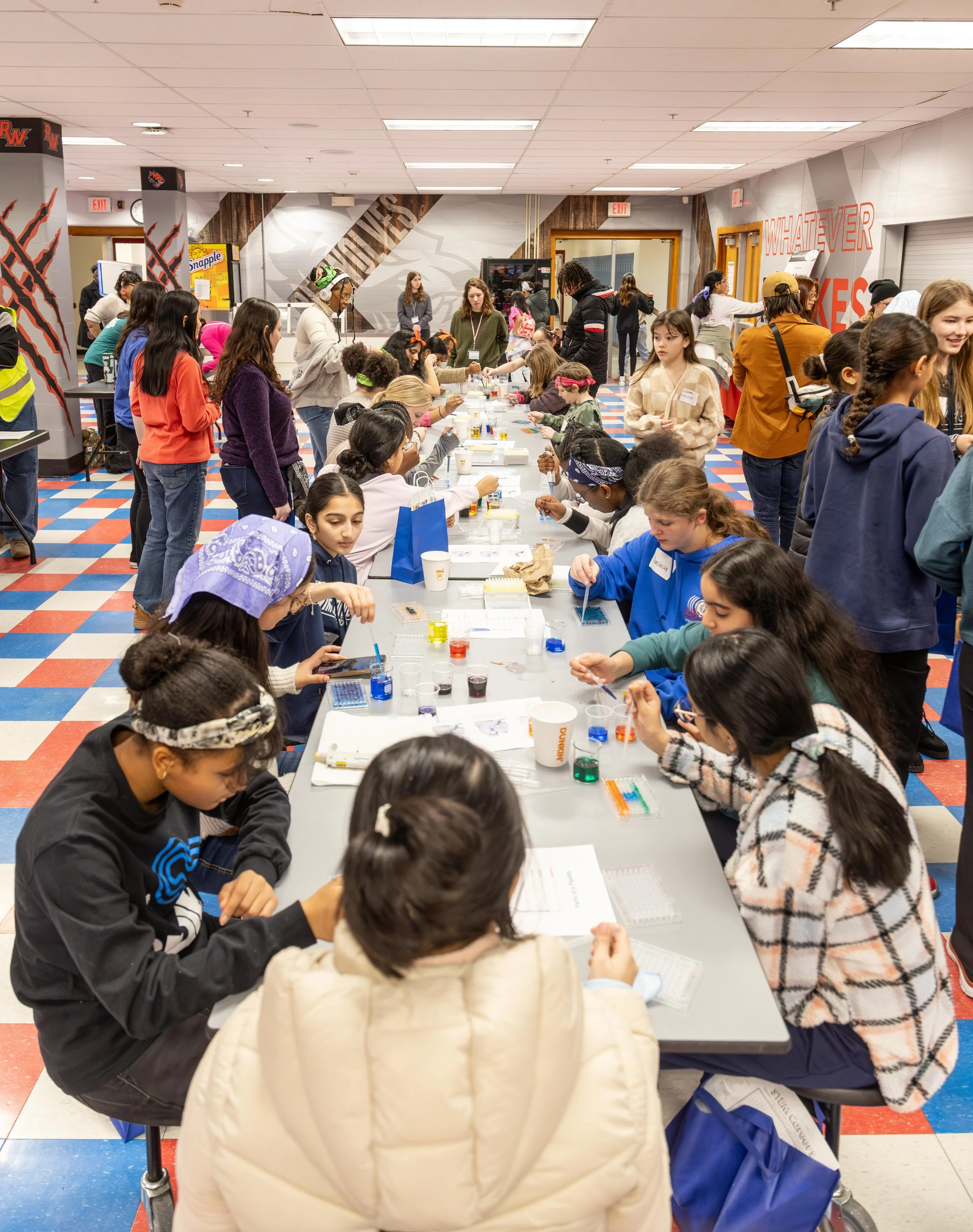
EYT is an event where middle school girls across Delaware can be introduced to scientific experiments and careers. This year, Amanda and I helped teach girls how to make art with micropipettes.
“Science is not a boy’s game, it’s not a girl’s game. It’s everyone’s game. It’s about where we are and where we’re going.”
Women’s Role in STEM
So why does increasing women in STEM even matter besides equity? Studies have shown that gender-diverse teams reduce groupthink, preventing everyone from conforming to a singular thought (Smith-Doerr et al., 2017). Additionally, teams and organizations with greater gender diversity are more likely to publish papers (Smith-Doerr et al, 2017) and have above-average profitability (Mays, 2022). It is overwhelmingly clear that women are necessary assets to STEM fields and careers.
Framing Women in STEM
With that in mind, we want to increase the amount of women in STEM. We can verbally encourage them all we want, but just encouragement isn’t enough. Girls and women need to be seen through the field. Oftentimes, girls can feel like STEM doesn’t align with their values, so one of the things we can do is talk about how STEM isn’t just one set thing.
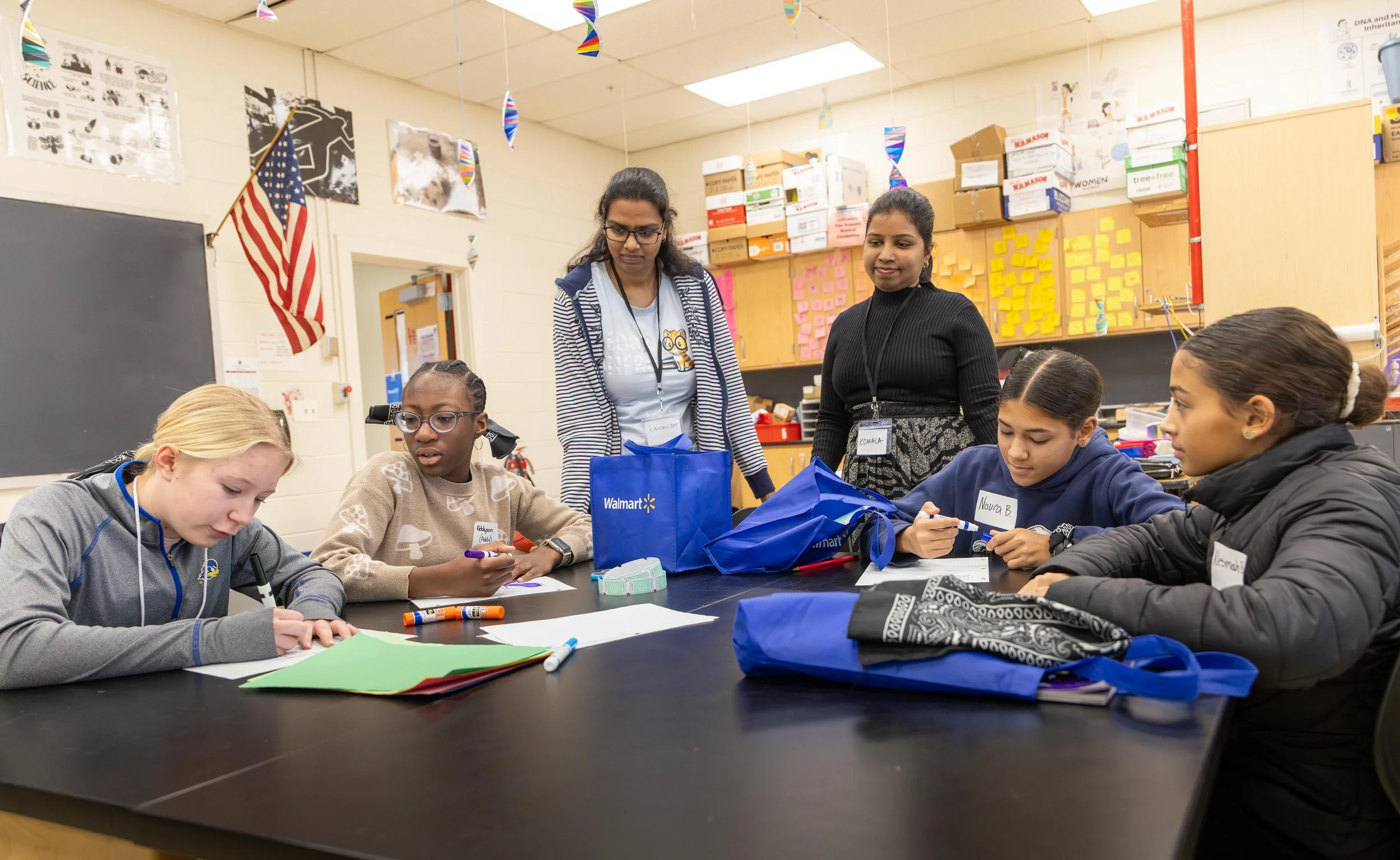
Engineering Your Tomorrow 2025, Girls planning their thermal dog house design together. Photographed by: Four Youth Productions
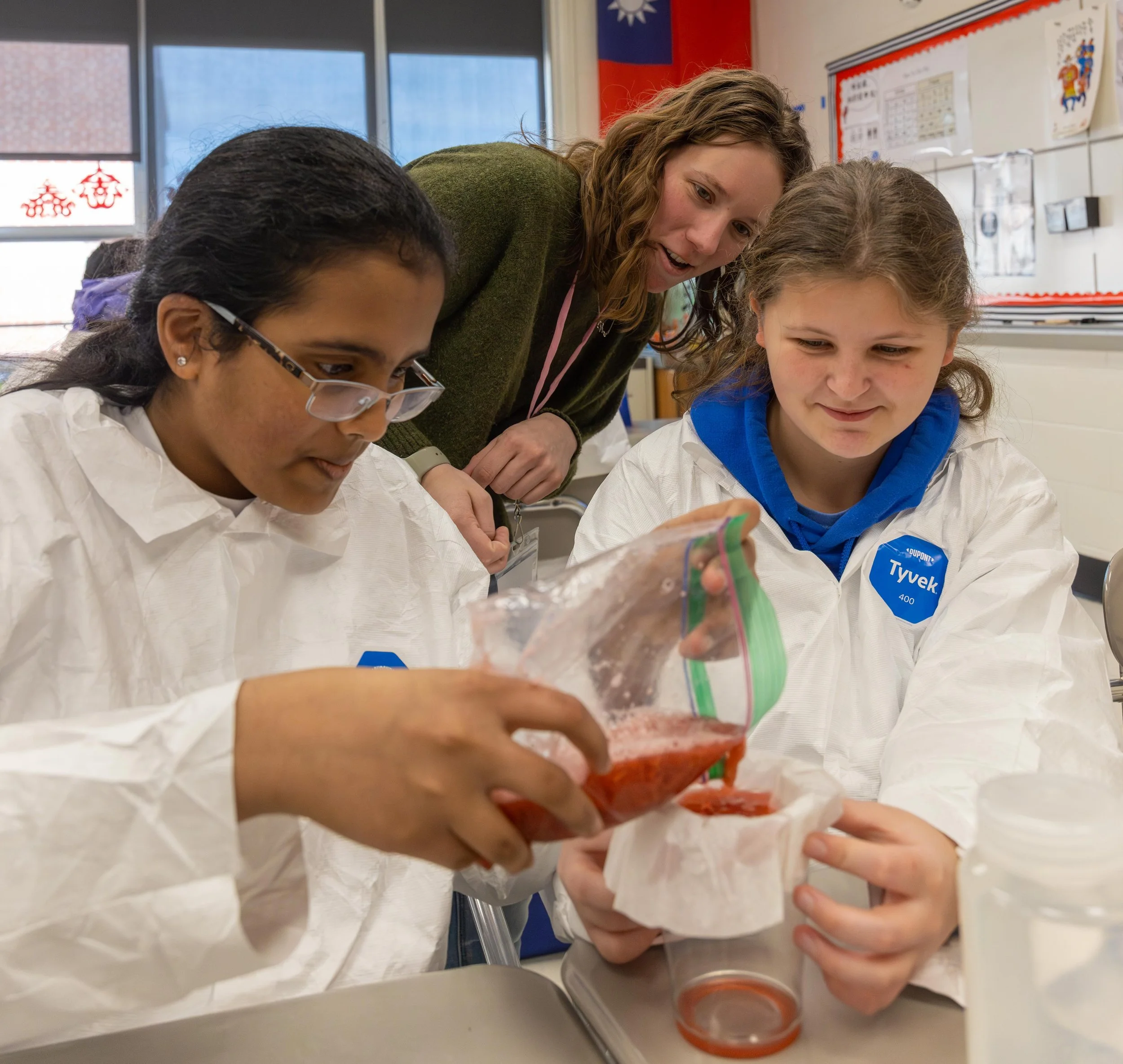
Engineering Your Tomorrow 2025, Girls collaborating on strawberry DNA extraction. Photographed by: Four Youth Productions
STEM can be creative, collaborative, and human! Environmental engineers can work with communities to build cleaner water systems and fight climate change. Biomedical engineers can design and create prosthetics to help kids walk again. Neuroscientists can study how trauma impacts the brain to improve mental health. STEM is never limited to just one thing. It can be anything you make it, and STEM is always shaped by the people in it. When it’s framed this way, we can help girls stay connected to the field and eventually pursue it.

Engineering Your Tomorrow 2025, Thermal dog houses designed and created by middle school girls. Photographed by: Four Youth Productions
Continuous Support & Mentorship
Girls need to be supported through all stages of their careers. This can be done through workshops and active mentorship.
A great mentor helps you believe in yourself, provides you with opportunities and new paths, and pushes you to reach your highest potential. But not every mentor will be the right fit and that’s okay! Look for someone that listens, respects your ideas, and supports your goals. A good mentor will see your potential and push you to build the skills and confidence you need to reach them.
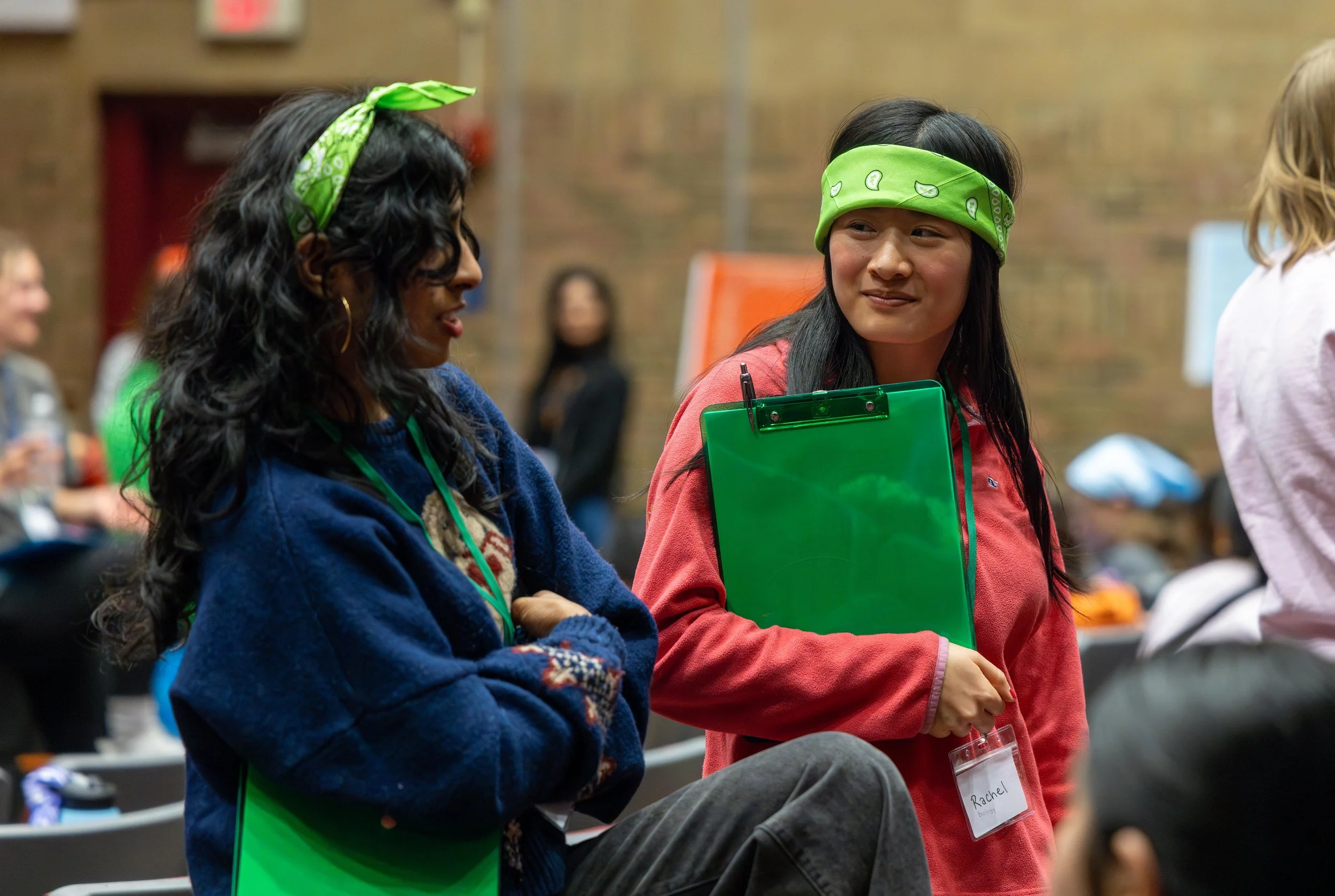
Engineering Your Tomorrow 2025, Group leaders wearing green bandanas. Photographed by: Four Youth Productions
You Belong in STEM!
Girls deserve to be in STEM. Not just in the classroom, but in the lab, the field, the leadership positions, and the future.
With community support and mentorship, we can help girls not just enter STEM, but stay, lead, and thrive.
References
Cheryan, S. (2012). Understanding the paradox in math-related fields: Why do some gender gaps remain while others do not? Sex Roles, 66(3-4), 184-190. https://doi.org/10.1007/s11199-011-0060-z
Lippa R. (1998). Gender-related individual differences and the structure of vocational interests: the importance of the people-things dimension. Journal of personality and social psychology, 74(4), 996–1009. https://doi.org/10.1037//0022-3514.74.4.996
Mays, D. C. (2022). How diversity makes better engineering. Journal AWWA, 114(9), 62–67.
Morgan, C., Isaac, J.D. & Sansone, C. The Role of Interest in Understanding the Career Choices of Female and Male College Students. Sex Roles 44, 295–320 (2001). https://doi.org/10.1023/A:1010929600004
Smith-Doerr, L., Alegria, S. N., & Sacco, T. (2017). How diversity matters in the US science and engineering workforce: A critical review considering integration in teams, fields, and organizational contexts. Engaging Science, Technology, and Society, 3, 139–153. https://doi.org/10.17351/ests2017.1
Swafford, M., & Anderson, R. (2020). Addressing the Gender Gap: Women’s Perceived Barriers to Pursuing STEM Careers. Journal of Research in Technical Careers, 4, 61. https://doi.org/10.9741/2578-2118.1070